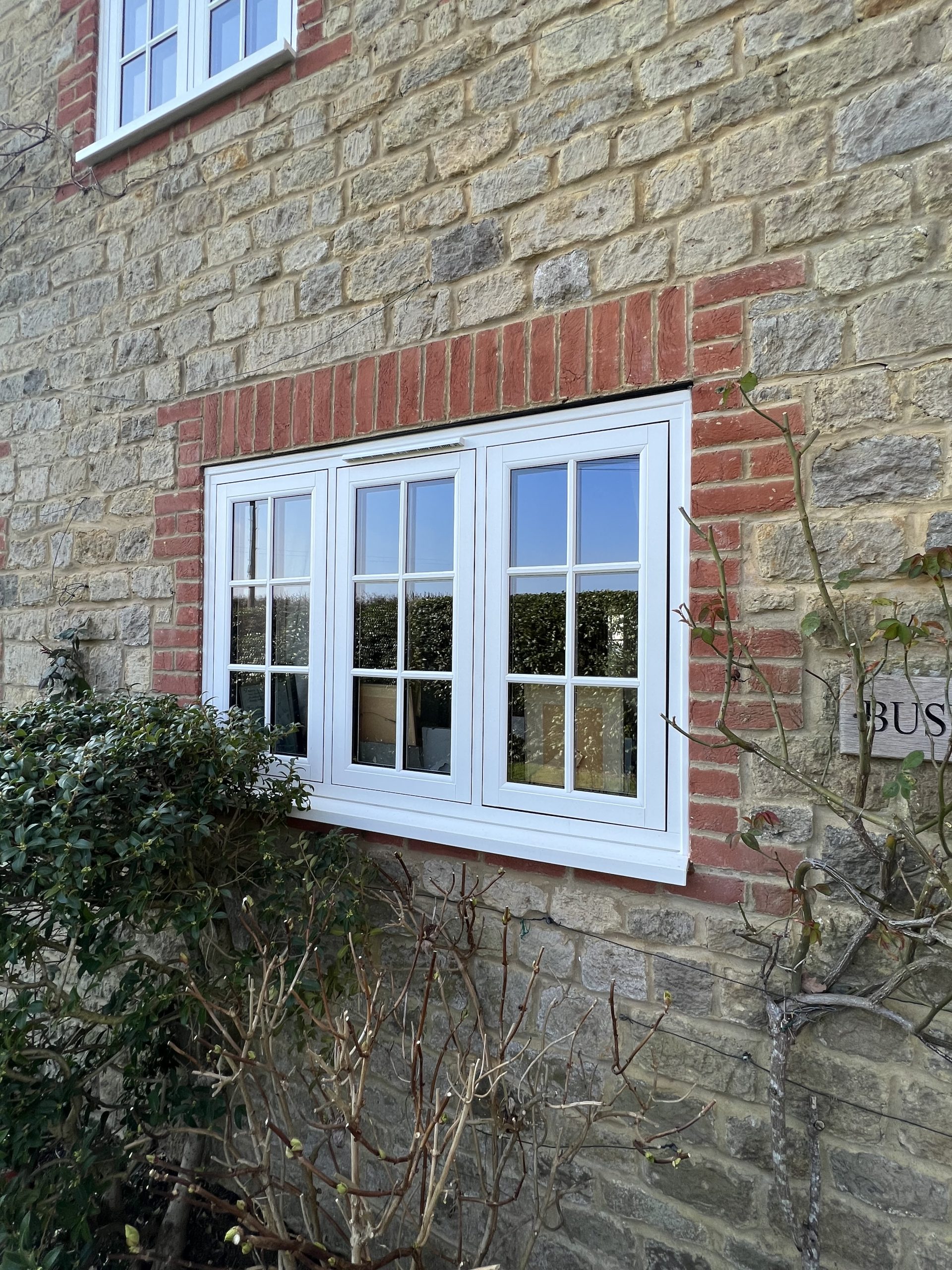

Horsham and its surrounding villages contain a wide variety of attractive period properties, from traditional cottages and Victorian terraces to Edwardian houses and larger character homes.
Original windows contribute significantly to the appearance of these properties. However, older windows can also become draughty, difficult to operate and expensive to maintain. Some may provide limited insulation or allow more outside noise into the home.
Replacing them can improve comfort, security and energy efficiency, but choosing an unsuitable design can affect the character of the property.
The best replacement windows for a period home should provide modern performance while remaining sympathetic to its original architecture. That means considering the window style, frame proportions, opening configuration, colour, glazing and finishing details rather than simply choosing a standard replacement.
In this guide, we look at the main points homeowners should consider when selecting replacement windows in Horsham for an older or character property.
Start with the architectural style of your home
The age of a property does not automatically determine which windows it should have. Houses from the same period can have very different elevations, proportions and original features.
Before selecting a replacement window, look carefully at:
- The proportions of the existing window openings
- Whether the original design was sash, casement or another style
- The position and thickness of glazing bars
- The shape of the window heads
- The depth and appearance of the frames
- The style of neighbouring properties
- Other architectural details, such as brickwork, stone, render or tile hanging
A Victorian terrace, for example, may suit vertically proportioned sliding sash windows. A traditional Sussex cottage may be better matched with flush-fitting casement windows and carefully positioned glazing bars.
Larger Edwardian homes may include a combination of sash windows, bay windows and decorative glazing. Later character properties might have steel-style or Crittall-inspired windows with much slimmer frames.
The objective should be to preserve the visual balance of the building rather than treating each window as an isolated product.
Sash windows for traditional Horsham properties
Sliding sash windows are closely associated with Georgian, Victorian and Edwardian architecture. They remain one of the most suitable choices for many period properties in and around Horsham.
Traditional sash windows consist of two vertically arranged panels, with one or both moving up and down. Their tall proportions help create the elegant appearance found on many older homes.
Modern double-glazed sash windows can reproduce this traditional appearance while offering improved insulation, security and ease of operation.
Important design details can include:
- Appropriate sash proportions
- Slimmer frames where possible
- Correctly positioned glazing bars
- Sash horns
- Traditional-style handles and locks
- A suitable frame colour
- A flush or understated external finish
These details can make a considerable difference. A sash window with heavy frames or poorly positioned glazing bars may look out of place, even when the basic window style is correct.
Modern sash windows are also easier to maintain than many original timber installations. They can reduce draughts and rattling while providing secure ventilation and smoother opening.
Casement windows for cottages and character homes
Casement windows are hinged at the side or top and open outwards. They are a versatile choice that can suit both modern and traditional homes.
For period properties, the design of the casement is particularly important. Standard frames with thick, uneven sightlines may not provide the required appearance. A more sympathetic design may use slimmer profiles, flush-fitting opening sections and carefully arranged glazing bars.
Facelift supplies made-to-measure casement windows in Horsham and the surrounding area. These can be designed around the proportions and character of the individual property.
Casement windows may be particularly suitable for:
- Country cottages
- Farmhouses
- Arts and Crafts-style properties
- Traditional detached homes
- Properties that originally featured timber casements
- Homes with smaller or wider window openings
The arrangement of the opening sections should also be considered. Matching the original configuration can help retain symmetry across the front of the home.
Aluminium windows for steel-style and Crittall-inspired designs
Some older properties feature narrow steel window frames. These are often valued for their slim appearance, but original examples may provide poor thermal performance and can be affected by corrosion or condensation.
Modern aluminium windows can provide a sympathetic alternative where a slim, steel-style appearance is required.
Facelift offers slim, flat sash-style aluminium windows that can be used as replacements for Crittall-type designs. Aluminium can also complement traditional properties where homeowners want narrow frames and larger glazed areas.
Benefits can include:
- Slim sightlines
- Strong, durable frames
- Low maintenance requirements
- A choice of colours and finishes
- Modern double glazing
- Improved thermal performance
- Suitability for larger panes of glass
Aluminium will not be the right choice for every period property, but it can work particularly well in homes where the original architecture included steel windows or strong Art Deco and early twentieth-century influences.
Choosing between uPVC, aluminium and timber-style finishes
The best frame material depends on the property, the required appearance, the available budget and any planning restrictions.
uPVC windows
Modern uPVC windows are energy-efficient, secure and relatively easy to maintain. They are available in more styles and finishes than many homeowners realise, including flush casements, sash windows and woodgrain-effect frames.
A carefully selected uPVC design can suit many period properties, particularly where the proportions, colour and glazing details are chosen correctly.
Aluminium windows
Aluminium is an excellent option where narrow frames, strength and a contemporary or steel-inspired appearance are important. It can work in both traditional and modern homes, depending on the design.
Timber and timber-style appearance
Timber provides an authentic finish, but it generally requires more ongoing care. High-quality uPVC and aluminium products can offer an alternative for homeowners who want a traditional appearance with reduced maintenance.
There is no single material that is best for every older home. The quality and suitability of the complete window design are more important than the frame material alone.
Pay attention to window proportions
One of the most common problems with unsuitable replacement windows is a change in the visible proportions.
Period windows often have slimmer frames and carefully balanced panes. Replacing them with excessively thick frames can reduce the glass area and make the elevation appear heavier.
When comparing window options, consider:
- The amount of visible frame
- The width of the central meeting rail
- Whether fixed and opening sections have balanced sightlines
- The position of transoms and mullions
- The relationship between the upper and lower panes
- Whether the design matches other windows on the property
This is especially important for bay windows and prominent front-facing windows. Small differences in frame thickness can become very noticeable when several windows are viewed together.
Select glazing bars carefully
Glazing bars divide a window into smaller panes and can be an important part of a period property’s appearance.
Their number, position and thickness should reflect the style of the home. Adding too many can make the window look busy, while removing them entirely may take away an important architectural feature.
Homeowners should also consider how the glazing bars are constructed. Options may include bars placed inside the sealed glass unit or external bars designed to create a more traditional appearance.
The right choice will depend on the property and the level of authenticity required.
Choose a colour that complements the property
White remains a popular window colour, but it is not the only suitable option for period homes.
Depending on the brickwork and architectural style, homeowners might consider:
- Cream or off-white
- Chartwell green
- Agate grey
- Black
- Anthracite grey
- Traditional woodgrain finishes
- Different internal and external colours
Softer colours can work well with brick, stone, render and traditional tile-hung elevations. Darker frames may suit properties with steel-style windows or stronger architectural detailing.
The window colour should also coordinate with the front door, roofline and any other external joinery.
Consider comfort as well as appearance
Retaining character is important, but replacement windows should also improve how the home feels.
Modern double glazing can help reduce heat loss and cold draughts. Better seals can make rooms feel more comfortable, particularly during the winter. Secure locking systems can provide reassurance, while appropriate opening configurations can improve ventilation.
Replacement windows may also help reduce external noise. This can be useful for homes close to busy roads, schools or other sources of regular sound.
In some situations, homeowners may consider triple glazing for additional insulation or sound reduction. However, triple glazing is not automatically necessary for every property. The complete window specification, glass type and quality of installation all affect performance.
A professional survey can help establish which option is appropriate for the home rather than simply specifying the highest number of glass panes.
Do you need permission to replace windows in Horsham?
Many homeowners can replace windows without making a planning application, but additional restrictions may apply to listed buildings, properties in conservation areas or homes affected by an Article 4 Direction.
Horsham District contains numerous conservation areas and more than 1,800 listed buildings. Listed building consent may be required where proposed work could affect the special architectural or historic character of a listed property.
Living in a conservation area does not necessarily prevent windows from being replaced. However, the design, materials and appearance may receive closer consideration, and permitted development rights can sometimes be restricted.
Before ordering replacement windows, homeowners should confirm:
- Whether the property is listed
- Whether it is within a conservation area
- Whether an Article 4 Direction applies
- Whether the existing windows are original or historically significant
- Whether planning permission or listed building consent is required
Horsham District Council should be consulted where there is any uncertainty. For protected buildings, it may also be appropriate to seek specialist planning or conservation advice before deciding on a window specification.
Why accurate measuring and professional installation matter
Even a well-designed window will underperform if it is measured or installed incorrectly.
Period properties are not always perfectly square, and window openings can vary significantly across the same building. Made-to-measure manufacturing allows each replacement to be designed for its specific opening.
A professional survey should assess:
- The condition and dimensions of the opening
- Internal and external finishes
- Existing lintels and surrounding materials
- Window board and sill details
- Access requirements
- Ventilation requirements
- The safest installation method
- Any signs of damp or movement around the opening
Careful installation also helps protect internal decoration, external render, brickwork and other surrounding features.
Facelift provides made-to-measure window options for traditional and modern homes across Horsham, Crawley, West Sussex and Surrey.
Common mistakes to avoid
When replacing period property windows, avoid making a decision based only on price or energy ratings.
Common mistakes include:
- Choosing frames that are too thick for the property
- Changing the original window proportions
- Using inappropriate glazing bar layouts
- Mixing several unrelated window styles
- Selecting a colour without considering the complete elevation
- Assuming planning permission will not be needed
- Replacing windows individually without planning how the whole property will eventually look
- Prioritising the lowest quotation over product quality and installation standards
A well-chosen replacement should look as though it belongs to the property. It should not draw attention to itself for the wrong reasons.
Questions to ask before choosing your new windows
Before accepting a quotation, ask the installer:
- Which window style best matches the age and architecture of the house?
- Can the original frame proportions and glazing layout be reproduced?
- Which materials and finishes are available?
- Can I see samples of the frames, colours and handles?
- What energy and security features are included?
- Will the windows be made to measure?
- How will the surrounding brickwork, render and decoration be protected?
- What guarantees are provided?
- Does the property require any planning or conservation approval?
- Who will carry out the installation?
Clear answers will make it easier to compare quotations on a like-for-like basis.
Why choose Facelift for replacement windows in Horsham?
Facelift Home Improvements is a local, family-run company established in 1997. The team supplies and installs windows in Horsham, Crawley and communities throughout West Sussex, East Sussex and Surrey.
Facelift offers a range of options for period and character properties, including:
- Sliding sash windows
- Casement windows
- uPVC windows
- Aluminium windows
- Double glazing
- Triple glazing
- Different frame colours and finishes
- Made-to-measure designs
As a multi-service home improvement company, Facelift can also help homeowners coordinate new windows with doors, roofing and wider property renovation work.
You can learn more about the company and visit its showroom through the Facelift About Us page.
Arrange a quotation for replacement windows in Horsham
Choosing replacement windows for a period property requires a balance between appearance, comfort, efficiency and practicality.
The right design can retain the character of an older home while providing warmer rooms, easier maintenance, improved security and more reliable everyday operation.
Facelift can help you compare sash, casement, uPVC and aluminium window options and select a design that complements your property.
To discuss replacement windows for your Horsham home, contact Facelift Home Improvements to arrange a free, no-obligation quotation.
Frequently asked questions
What are the best replacement windows for a period home?
The best choice depends on the property’s original architecture. Sliding sash windows are often suitable for Georgian, Victorian and Edwardian homes, while flush or traditionally styled casement windows may suit cottages and rural properties. Slim aluminium frames can work well where the original building featured steel-style windows.
Can modern windows match the appearance of traditional windows?
Yes. Modern windows can include traditional proportions, glazing bars, sash horns, woodgrain finishes and heritage-style hardware. The final result will depend on choosing the correct product and specifying the design details carefully.
Are uPVC windows suitable for period properties?
They can be. Modern uPVC windows are available in sash and flush-casement designs with traditional colours and woodgrain finishes. The proportions and detailing should be appropriate for the individual property.
Do I need planning permission to replace windows in Horsham?
Planning permission is not required for every window replacement. However, restrictions may apply if the property is listed, situated in a conservation area or covered by an Article 4 Direction. Check with Horsham District Council before proceeding where the status of the property is uncertain.
Is double glazing suitable for an older home?
Modern double glazing can be incorporated into many heritage-style window designs. It can improve insulation, reduce draughts and make the property more comfortable without necessarily introducing a modern-looking frame.
Should all the windows be replaced at the same time?
Not necessarily. Windows can often be replaced in stages. However, it is sensible to agree on an overall design, colour and specification first so that future installations remain consistent.
How long do replacement windows take to install?
The installation time depends on the number and size of the windows, access, the condition of the openings and any additional finishing work. The installer should provide a clearer schedule after completing a property survey.
Can Facelift replace bay and sash windows?
Facelift offers made-to-measure casement and sliding sash window options. The team can assess existing bay windows and other character features during the survey and recommend an appropriate replacement specification.

Suggested image alt text:
- Replacement sash windows on a period home in Horsham
- Heritage-style double-glazed windows in Horsham
- Traditional casement windows for a Sussex period property
- Slim aluminium windows for an older Horsham home
- Period property replacement window consultation